
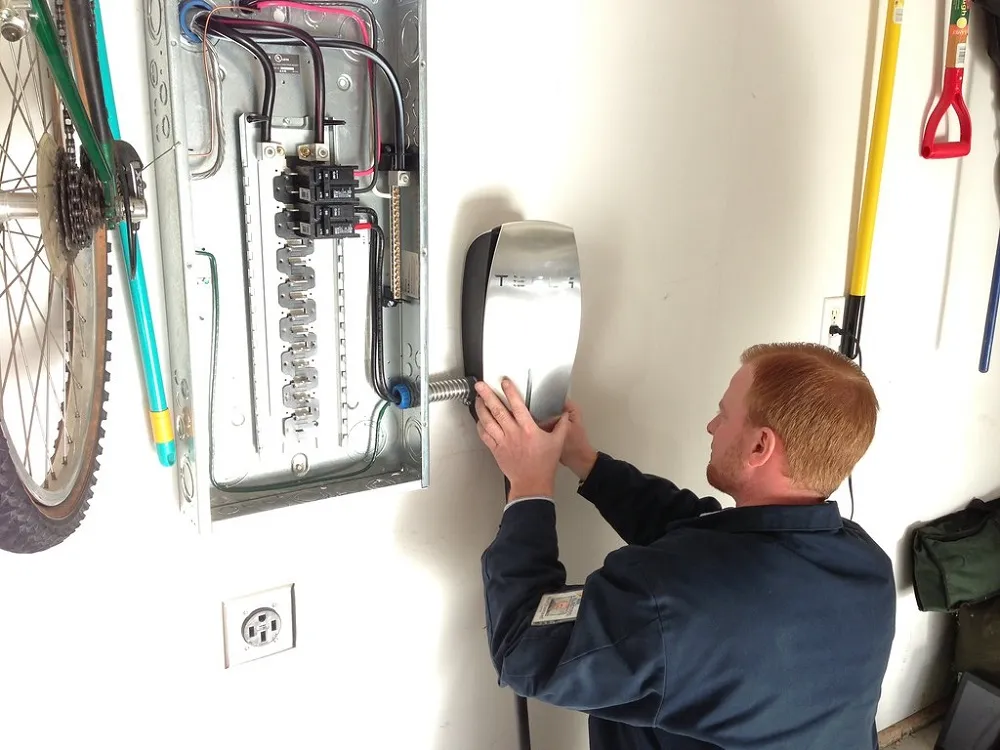
Reliable EV charger installation in Volusia County, FL with proper circuits, load planning, safe setup, faster charging, and reliable everyday performance.
Electric vehicle ownership becomes more convenient when dependable charging is available where the vehicle is parked most often. Public charging can be useful while traveling, but homeowners and businesses frequently benefit from having dedicated charging equipment at their own property. Altech Electric provides residential and commercial electrical services throughout Central Florida, including EV charging equipment, electrical panels, wiring, lighting, power distribution, and electrical upgrades. Installing an EV charger involves more than mounting a charging unit near a parking space. The electrical system should be evaluated for available capacity, panel condition, circuit requirements, wiring routes, charger output, and future electrical demand. Property owners in Volusia County, Lake County, and surrounding communities should also consider where vehicles normally park and whether additional electric vehicles may be added later. Proper planning can help create a charging setup that is convenient to use while matching the electrical capabilities of the property.
How EV Charger Installation Works
Professional EV charging station installation begins with evaluating the electrical system and the charging equipment that will be installed.
An electrician can review the service panel, available breaker space, overall electrical demand, charger specifications, proposed location, and route for the required wiring.
Many EV chargers require a dedicated circuit so the equipment receives the electrical supply specified for its operation.
The circuit, wiring, breaker, and other components should match the requirements of the charging unit rather than being selected only according to what is easiest to install.
Location is another important part of the project.
The charger should be positioned where the cable can comfortably reach the vehicle without creating unnecessary obstacles around a garage, driveway, walkway, or parking area.
After installation, the equipment should be tested so the property owner can confirm that charging begins and operates as expected.
Understanding EV Charging Levels
Different charging methods provide different charging speeds.
A standard household outlet can provide basic charging for some electric vehicles, but it may take much longer to replenish a battery.
Level 2 charging is commonly installed at residential and commercial properties because it can provide faster charging through a higher-voltage electrical connection.
The best option depends on the vehicle, driving habits, and how long the vehicle usually remains parked.
A homeowner who drives a moderate distance each day and charges overnight may not need the same charging output as a commercial fleet that requires vehicles to return to service quickly.
Businesses should also think about how customers or employees will use charging stations.
Selecting equipment around actual charging needs can prevent unnecessary electrical upgrades while still providing practical daily charging.
EV Charger Installation in Volusia County, FL
Property owners planning EV charger installation in Volusia County, FL should begin with an assessment of the existing electrical system.
Some homes may already have sufficient capacity and available panel space for a new charger. Other properties may have older equipment or significant electrical demand from air conditioning, appliances, pool equipment, water heaters, and other systems.
The location of the charger also affects the installation.
A charger installed near the electrical panel may require a shorter wiring route, while equipment placed farther away can require additional electrical work.
Outdoor charging locations should use equipment and installation methods suitable for exterior conditions.
Commercial properties may need even more planning when several charging stations are expected.
The electrician should consider the combined electrical demand of all proposed chargers rather than evaluating each unit separately.
Planning these details before installation can help avoid changes after equipment has already been selected.
EV Charging Services in Lake County, FL
Homeowners and businesses considering EV charging services in Lake County, FL should also think about future transportation needs.
A household may own one electric vehicle today but plan to purchase another later.
Businesses may initially install a limited number of charging stations before expanding availability for employees, customers, tenants, or fleet vehicles.
Future expansion does not always mean installing additional chargers immediately.
However, discussing those plans during the first project can help the electrician evaluate panel capacity, wiring routes, charger placement, and possible electrical upgrades more effectively.
The existing service panel should also be inspected before new high-demand circuits are added.
If electrical capacity is limited, the contractor can explain what changes may be necessary and why.
The goal should be to create a charging setup that works for current needs without ignoring obvious future requirements.
Why Electrical Load Planning Matters
EV charging equipment can add a substantial electrical load to a home or commercial property.
Electrical load planning helps determine whether the existing system can safely support that additional demand.
The electrician reviews the electrical service along with equipment already operating at the property.
Air conditioners, electric ranges, dryers, water heaters, pool systems, commercial machinery, and other high-demand equipment all contribute to the total load.
A charger should not simply be added because an unused breaker position appears available.
Panel space and electrical capacity are two different considerations.
Load calculations can also help determine whether a lower or higher charger output makes sense for the property.
The fastest possible charging speed is not always necessary if the vehicle remains parked overnight.
Matching charger output with actual driving habits and available capacity can create a more practical installation.
When an Electrical Panel Upgrade May Be Needed
Some EV charger installations work with the existing panel, while others require additional electrical improvements.
An older panel may have limited breaker space or insufficient capacity for a new charging circuit.
The electrical service may also be heavily loaded by other equipment already operating at the property.
A panel upgrade should be recommended based on the electrical assessment rather than automatically included with every EV charger project.
If an upgrade is needed, the electrician should explain the limitation that makes it necessary.
Property owners should also mention other planned improvements.
Adding a new HVAC system, electric water heater, major appliance, pool equipment, or second EV charger could influence current electrical planning.
Considering those future loads can help homeowners avoid upgrading electrical equipment more than once within a short period.
Home EV Charger Placement
Residential charger placement should fit the homeowner’s normal parking routine.
Garages are common locations because they provide protection from weather and may be relatively close to the home’s electrical system.
Driveway installations can also work when the charger and electrical components are appropriate for outdoor conditions.
Cable reach should be considered carefully.
Drivers should be able to connect the vehicle without stretching the charging cable across heavily used walkways or locations where it could be damaged.
The location of the charging port on the vehicle can also influence placement.
Homeowners who expect to replace their current EV with another model should consider whether the proposed location will still be practical for different vehicle designs.
A convenient installation encourages regular charging without making parking or movement around the property more difficult.
Commercial EV Charging Stations
Commercial charging projects often involve more users and greater electrical demand than residential installations.
Offices may provide charging for employees who remain parked for several hours.
Retail properties may offer charging to customers during shorter visits.
Apartment communities may need equipment for residents, while fleet operations may require predictable charging schedules for business vehicles.
The electrical design should reflect how the chargers will actually be used.
Several stations operating at the same time can create substantial demand on the property’s electrical service.
Parking layout also requires planning.
Charging spaces should remain accessible without interfering with entrances, loading areas, walkways, traffic flow, or other business operations.
Commercial property owners should also consider whether additional stations may be added as EV use increases.
Planning the first phase carefully can make later expansion easier to manage.
Indoor and Outdoor Installation Considerations
The environment around the charger affects equipment selection and installation.
Indoor garage chargers generally have more protection from rain and direct weather exposure.
Outdoor chargers should be suitable for exterior use and installed according to the conditions of the property.
The wiring route may pass through walls, ceilings, garages, exterior surfaces, or other areas depending on where the electrical panel and parking space are located.
Longer wiring runs can increase installation complexity.
Physical protection may also be important in locations where vehicles, equipment, or regular foot traffic pass near the charger.
Before finalizing the mounting location, property owners should consider electrical access, cable reach, parking position, environmental exposure, and future expansion.
Choosing the location carefully at the beginning can make everyday charging more convenient.
Planning for a Second Electric Vehicle
Many households eventually operate more than one electric vehicle.
A homeowner installing the first charger should mention any realistic plans for another EV.
The electrician can then consider whether the existing electrical system could support another charger and whether the current wiring route or charger location should account for future expansion.
This does not always require installing a second charging station immediately.
The objective is simply to avoid creating unnecessary limitations.
Businesses can use the same approach.
A company may begin with a small number of charging stations and add more as employee or fleet demand increases.
Understanding likely growth can help guide panel capacity, circuit planning, and equipment placement from the beginning.
Testing the Charger After Installation
A charger should be tested before it becomes part of the property’s normal routine.
The electrician can verify the electrical connection, circuit operation, charging equipment, and communication with the vehicle.
Some chargers also include mobile applications, charging schedules, usage information, Wi-Fi connectivity, or other controls.
Property owners should understand how those features operate if they are part of the selected equipment.
Repeated faults, unusual heat, damaged cables, or inconsistent charging should not be ignored.
Resetting equipment repeatedly without understanding the cause may leave an electrical or charger problem unresolved.
Professional inspection can help determine whether the issue comes from the charger, circuit, connection, or another part of the system.
Choosing an EV Charger Installation Contractor
A qualified electrical contractor should evaluate the property before finalizing the charger installation.
Ask whether the electrical panel has sufficient capacity, what circuit is required, and whether additional electrical work is necessary.
The contractor should review the specifications of the actual charging equipment rather than relying on a general estimate.
For commercial projects, the scope should also include the number of chargers, expected users, parking layout, electrical demand, and possible future expansion.
Property owners should understand what is included in the work, such as wiring, breaker installation, charger connection, mounting, testing, or related electrical upgrades.
Clear project planning helps ensure that the charging station matches both the vehicle’s requirements and the property’s electrical system.
Conclusion
EV charger installation can make electric vehicle ownership more practical by providing convenient charging at homes, offices, commercial properties, and fleet facilities.
For property owners in Volusia County and Lake County, the process should begin with evaluating electrical capacity before choosing the final charger configuration.
Panel condition, circuit requirements, charger output, wiring distance, parking position, cable reach, and future EV ownership can all influence the project.
Residential installations may focus on reliable overnight charging, while commercial properties may need to support several users and greater overall electrical demand.
Proper testing should also be completed before regular use begins.
By matching the charging equipment to the property’s electrical system and actual driving needs, homeowners and businesses can create a dependable charging setup that supports current vehicles while allowing future electrical needs to be considered.
Frequently Asked Questions
What electrical work is usually needed for an EV charger?
The project may require electrical load assessment, a dedicated circuit, suitable wiring, breaker installation, charger mounting, connection, and final testing.
Does every EV charger require a panel upgrade?
No. Many properties can support EV charging with the existing panel. An electrical assessment determines whether additional panel capacity or other upgrades are necessary.
Is Level 2 charging suitable for residential properties?
Yes. Level 2 charging is commonly used at homes when the electrical system can support the required circuit and charging equipment.
Can an EV charger be installed outside?
Yes. EV charging equipment designed for outdoor use can be installed in exterior locations when the electrical installation is appropriate for those conditions.
Can a commercial property install several EV chargers?
Yes. Multiple chargers can be installed, but the combined electrical demand, service capacity, parking layout, and future expansion should be evaluated first.
Should I mention future EV purchases before installation?
Yes. If another electric vehicle is likely, discussing it during the electrical assessment can help with charger placement, panel capacity, and future circuit planning.