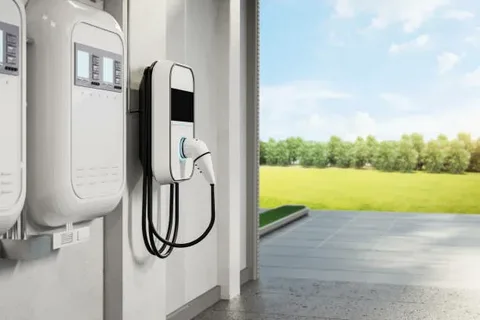
More Marion County residents are making the switch to electric vehicles, and home charging has become part of the daily routine. Level 2 EV charger installation services in Marion County give you faster, more dependable charging right at your home — without relying on public stations. Altech Electric of Central Florida, INC works with homeowners throughout the county to manage these installations from the initial panel check all the way through final inspection.
Choosing the right setup takes more than buying a charger online. Your home’s electrical panel, the distance from the panel to your garage, and your vehicle’s charging speed all play a role. This guide walks you through charger options, the step-by-step installation process, what drives costs in this area, and how to find a qualified electrician who gets the job done right.
Why Marion County Drivers Are Upgrading to Level 2 Charging
Florida’s electric vehicle market has grown fast over the past few years. According to the U.S. Department of Energy (2024), Level 2 chargers deliver power at four to eight times the rate of a standard 120-volt household outlet. That gap matters when you drive daily and need a reliable charge waiting each morning.
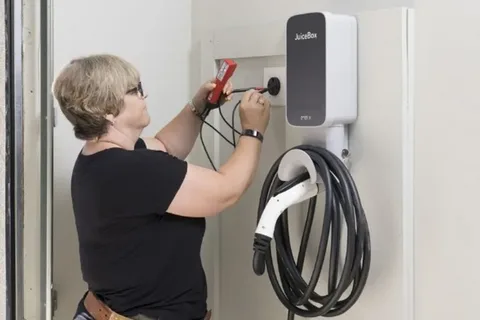
Marion County’s warm climate places extra demand on EV batteries. Air conditioning runs constantly through summer, and many residents cover significant ground traveling between communities across the county. A slow Level 1 charger frequently leaves drivers starting their day short on range. EV charging station electricians in Marion County see this concern come up consistently with first-time EV owners.
Home charging also affects property appeal. A licensed electrician in Central Florida noted that homebuyers who own EVs now regularly ask about dedicated charging circuits during home searches — it has shifted from a bonus to a practical feature buyers expect. Level 2 EV charger installation services in Marion County give your home a functional advantage that directly meets that demand.
EV Charger Types and Options for Residential Homes
Not all Level 2 chargers perform the same way. Some include Wi-Fi, energy tracking, and scheduled charging windows. Others stay simple and reliable, built for daily use without app integration. Your pick depends on how you drive and whether monitoring your energy use matters to you.
EV charging station electricians in Marion County typically walk clients through four main residential options before recommending one:
| Charger Type | Power Output | Smart Features | Best For | Installation Notes |
| Basic Hardwired | 7.2 kW | None | Budget-focused owners | Dedicated 240V circuit required |
| Smart Plug-In (NEMA 14-50) | 7.2–9.6 kW | App control, scheduling | Flexibility seekers | NEMA 14-50 outlet installation needed |
| Smart Hardwired | 9.6–11.5 kW | Wi-Fi, energy tracking | Tech-focused users | Permanent wall mount, permit required |
| High-Output Hardwired | 19.2 kW | Varies | Multi-EV households | May require panel upgrade |
A NEMA 14-50 outlet gives you the freedom to swap charger brands later without rewiring. A hardwired unit provides more long-term stability and often qualifies for utility rebate programs in Florida.
Before committing to a charger type, getting a professional assessment from Best Level 2 EV charger installation services in Marion County providers tells you exactly what your panel can support — so you do not over-purchase or under-invest.
How the Level 2 EV Charger Installation Process Works
Pre-Installation Assessment and Panel Review
Every quality installation starts with a full assessment of your main electrical panel. Your electrician checks your current load, counts available breaker slots, and measures the distance from your panel to the planned charger location.
Many older homes in Marion County carry 100-amp panels. A Level 2 charger typically needs a dedicated 40- to 50-amp breaker. If your panel runs near its capacity, upgrading it becomes part of the project scope. EV charging station electricians in Marion County flag this early so you understand the full picture before work begins — no surprises after the job starts.
Permits are a required step for Level 2 EV charger installation services in Marion County. Your electrician files with the Marion County building department before any wiring starts. Skipping permits puts your homeowner’s insurance at risk and creates real problems when you sell your home later.
Wiring, Mounting, and Final Inspection
After permits are clear, the electrician runs new wiring from your panel to the charger mounting location. They secure the unit to the wall, make the circuit connections, and label the breaker clearly for future reference.
A final inspection by a Marion County building official confirms the work meets National Electrical Code (NEC) requirements. This protects you long-term and ensures your installation is fully up to code. Companies like Altech Electric of Central Florida, INC that specialize in Level 2 EV charger installation services in Marion County manage the permit and inspection process from start to finish, so you do not need to coordinate with the building department yourself.
According to the Electric Power Research Institute (EPRI, 2023), a correctly installed Level 2 charging unit lasts between 10 and 15 years with minimal upkeep. Getting the installation right from the beginning saves you from costly repairs down the road.
What Drives Installation Costs in Marion County
Electrical Panel Condition and Cable Run Length
The biggest variable in any Level 2 EV charger installation services in Marion County project is the state of your electrical panel. A newer 200-amp panel with open breaker slots keeps the scope focused and straightforward. An older panel running near its limit adds scope and cost to the project.
Cable run length shapes the cost, too. When your panel sits on the opposite side of the house from your garage, the electrician needs more conduit and wire to reach the charger location. Professional EV charging station electricians in Marion County factor this into their estimates from the start, so nothing surprises you once work begins.
Charger Selection and Permit Fees
The charger unit you choose directly affects the project total. Smart chargers with energy management and scheduling features cost more than basic plug-in models. Marion County permit fees for electrical work depend on the scope of the project — your electrician should break those out as a line item in any written quote.
Some Florida utilities offer rebates for Level 2 charger installations. Ask your energy provider and your electrician whether your project qualifies. EV charging station electricians in Marion County with residential EV experience know which programs apply in this area and can help you take advantage of available savings before the project closes.
How to Choose the Right EV Charging Station Electricians in Marion County
Check the license of your electrician first. To work in Florida, electrical contractors must be state licensed through the Department of Business and Professional Regulation (DBPR). Before signing anything, check the contractor’s license through the DBPR’s online contractor database.
Inquire directly about EV charger installation experience. Although general electrical qualifications and EV-specific knowledge are overlapping, they are not the same. An electrician who has done plenty of EV charger installation services in Marion County will pick up on possible panel problems early, knows how to size circuits properly and knows what local inspectors look for on the final walk-through.
A contractor who regularly accomplishes EV installations in Marion County such as Altech Electric of Central Florida, INC files permit paperwork as part of the routine and knows what the county inspectors look for. Most general contractors tend to hand off the electrical work to anyone that will do it. This introduces a lot of uncertainty into the timeline and outcome.
Before making a commitment, obtain at least two written, itemized quotes. A trustworthy estimate covers assessment of the panel, charges for the wiring, the charger unit, permit fees, and a walkthrough post-installation. Electricians in Marion County who back their work up with a labor warranty for EV charging stations be sure to inquire about coverage specifics before signing.
Conclusion
Marion County offers installation of level 2 ev charger that provides residential customers with a reliable long-term solution for daily home charging. Carefully choosing a charger and passing a final county inspection leads to a setup that works properly for you every single morning you need it. An electrician who knows what it involves makes the process very straightforward.
Experienced EV charging station electricians in Marion County make the difference between a successful project and a frustrating one. Request the verification of licenses and an itemized quote from contractors. Select a contractor who submits applications for permits as part of the job. A Level 2 charger installed properly pays for itself in daily convenience the moment you start the day with a full battery.
FAQ’s
How long does Level 2 EV charger installation in Marion County take?
Most residential installations in Marion County take between two and six hours for the physical work. If your panel needs upgrading or permit approval extends the schedule, the full timeline may stretch to a few days. Planning ahead and booking early during low-demand periods reduces delays.
Do I need a permit for EV charger installation in Marion County?
Yes. Marion County requires an electrical permit for any Level 2 charger installation. Your electrician files the permit with the county building department and arranges the final inspection. Skipping this step violates local code and can create serious complications with your insurance or at the time of a future home sale.
How much does EV charger installation cost in Marion County?
Costs in Marion County vary based on panel condition, cable run length, charger type, and permit fees. A straightforward job on a modern panel with available capacity costs less than a project requiring a panel upgrade or long conduit runs. Get itemized quotes from multiple EV charging station electricians in Marion County for an honest comparison.
Will a Level 2 charger hold up in Marion County’s heat and humidity?
Quality Level 2 chargers carry NEMA 4 or NEMA 3R weather ratings, which make them suitable for Florida’s outdoor conditions. Units rated for high heat and moisture perform well through Marion County’s long summers and frequent afternoon storms.
Can any licensed electrician handle Level 2 EV charger installation in Marion County?
Any state-licensed Florida electrical contractor can legally perform this work. In practice, electricians with dedicated EV charger installation experience complete the job more efficiently and with fewer issues. They know how to size circuits correctly, position units for daily usability, and manage the permit process without unnecessary delays.